
Environmental Concerns at the Lansing Site
Why we oppose a new AI Data Center in Tompkins County: Mini Series Part 4
What The Site is Like
The proposed 183-acre site presents substantial environmental challenges. The parcel is 55% forested, contains 12% wetlands, and includes a 10%–15% slope in the Phase 1 area, according to LiDAR data looking at the specific location of the footprint. The site also carries a long history of industrial contamination from it's coal power plant days. In 1977 a 42-acre coal ash landfill was installed on site which is 75% unlined at the bottom. Annually, Cayuga Operating Company has a permit to drain 24-30 million gallons of contaminated effluent from the retention pond downhill of the landfill into Cayuga Lake.
Lack of Trees Will Increase Runoff
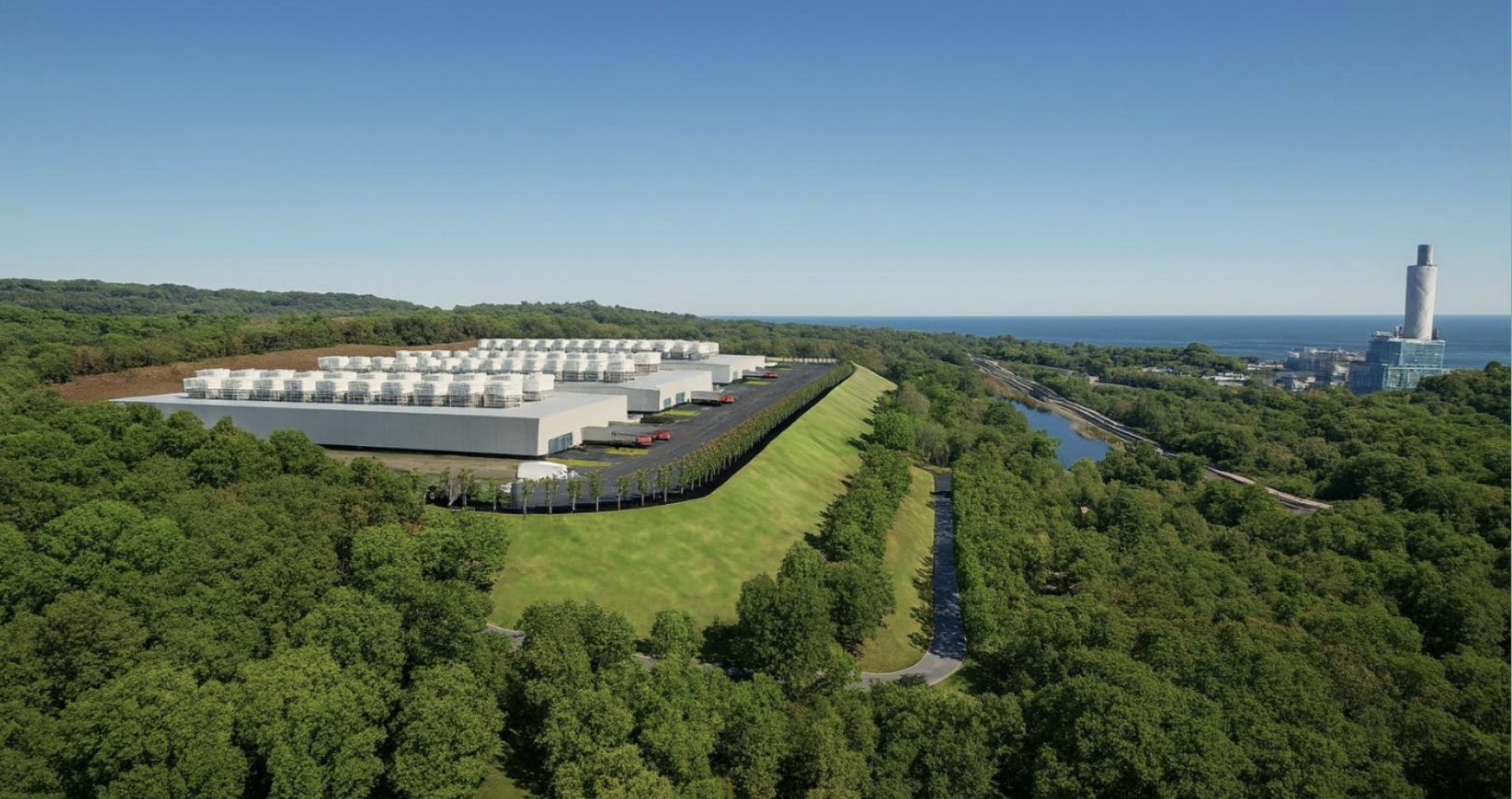
Photo courtesy of the official “CAYUGA Site Development- Conceptual Renders” submitted by TeraWulf to Lansing town board.
Clear cutting trees to level a 27-acre impervious area that their buildings will sit on may lead to massive runoff into the lake.
Impacts to Wetlands (12% of the area of proposed data center)
To name just a few negative impacts of development on wetlands, according to a publication on the environmental impact of transmission line construction: “Clearing forested wetlands changes the habitat type for decades, and can expose the wetland to invasive and shrubby plants, thus removing habitat for species in the forest interior; Construction and maintenance equipment that crosses wetlands can stir up sediments and endanger fish and other aquatic life; Wetland soils can be easily compacted, increasing runoff, blocking flows, and greatly reducing the wetland’s water holding capacity”
According to TeraWulf’s Site Development plan, they will be constructing new transmission lines through wetlands.
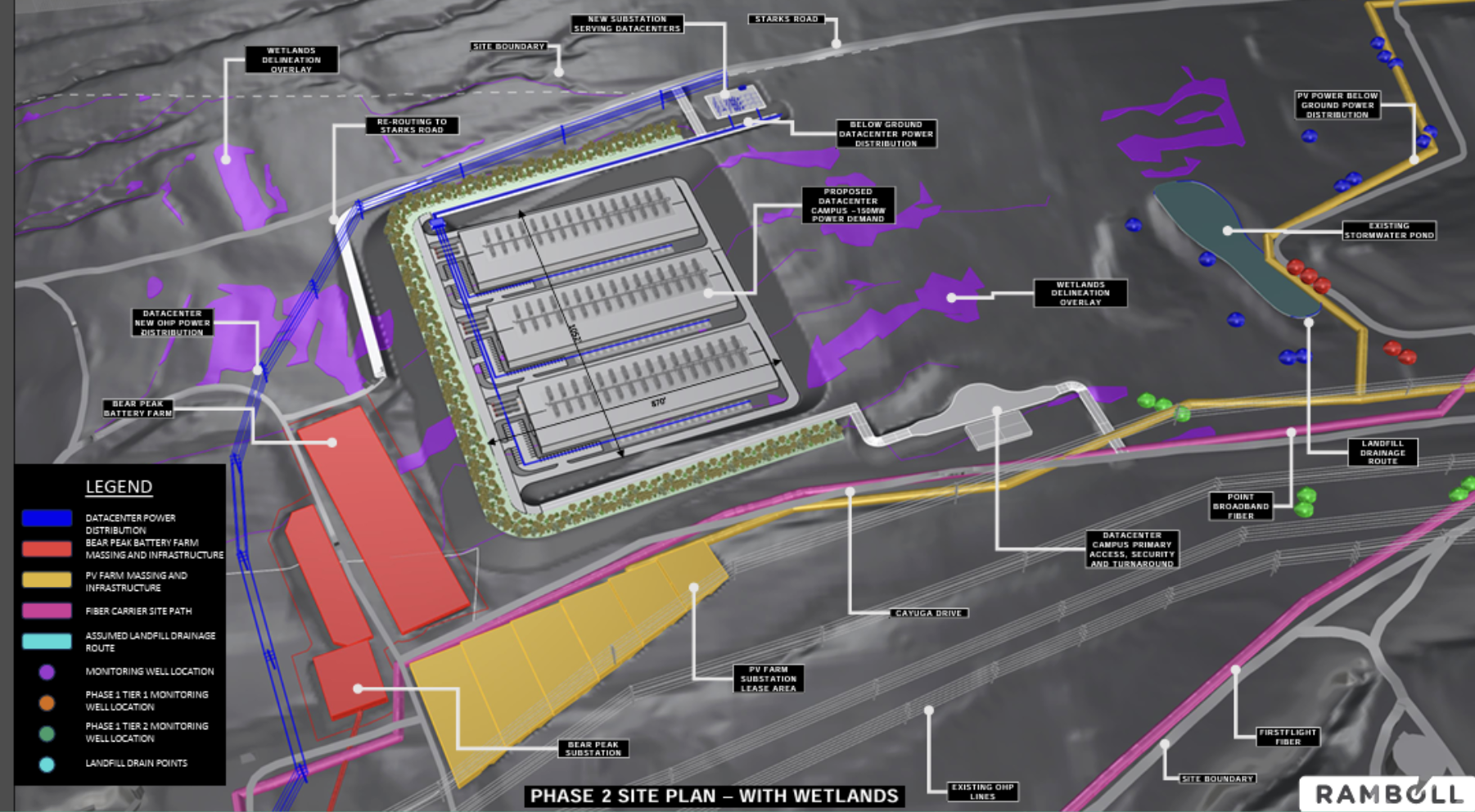
Dark blue lines show the data center power distribution running through the purple wetlands areas.
Severe soil disturbances may permanently alter wetland hydrology. A secondary effect of disturbance is the opportunistic spread of invasive weedy species.
New Trees Won’t Have Needed Impact for Decades
TeraWulf mentioned planting trees down slope of the buildings to block the sound, but according to a local expert on services provided by trees, they would not block the sound efficiently. Additionally, trees tall enough to impact the visual or auditory effects of the data center will take decades to grow. There is also concern of reduced permeability of the soil around the construction site. Once the trees are cut and the machinery has been run on the site, the compaction of the soil will be immense, thus reducing the water holding capacity of the soil, consequently leading to more runoff and erosion of the hillside.
CO2 Emissons for Training AI Models
According to researchers at the University of Massachusetts, the carbon dioxide emissions for training one AI model are equivalent to a trans-American flight. Additionally, a life cycle assessment for training several common large AI models showed this process can emit more than 626,000 pounds of carbon dioxide equivalent—nearly five times the lifetime emissions of the average American car.
We do not support this type of irresponsible CO2 emissions happening in Tompkins county.
Light Pollution Impacts Bird Species
The Cayuga Data Campus will be installing outdoor light poles and exterior building lights, which can have negative impacts on the local birds who live and hunt there. Artificial light at night impacts duck’s food access by altering the location of zooplankton they eat, disrupts heron’s crepuscular/nocturnal fishing, may disrupt bird foraging, alters night behaviors, increases stress, draws insects away from their natural areas, and concentrates predators of bird chicks who may nest nearby. Herons and egrets have zero tolerance for chronic noise and light. Once they leave, they rarely return.
Solid Waste Produced at the Cayuga Site
According to the Full Environmental Assessment Form submitted to the town of Lansing by TeraWulf, it is anticipated that around 1,140 tons of solid waste will be produced during the 25 month construction time frame, which will end up in our local landfill.
We Have the Ability to Slow Down the Current Unregulated AI Boom by Rejecting TeraWulf’s Development in Lansing
This lakefront property is an important and sensitive ecosystem, any deleterious impacts on the soil and plant life will have amplified consequences on the lake ecosystem as a whole.
It is our duty to be informed about these big-picture topics related to AI and make the right decision for our community and for our lake.
Follow along this week for more of our mini series.
Sources
December 10 Zoning Board of Appeals agenda packet
Cayuga Site Development renderings submitted by TeraWulf
